I write this from my bed, a puppy dozing peacefully beside me. The window light casts a quiet, cozy peace over the room. Objectively, I have no business being stressed- yet here I sit, wondering how to boil down a year’s worth of thoughts into something coherent.
2025 has been a landmark year, defined by the ways AI is reshaping the tech industry and the world at large. I won't shy away from discussing it. For me, the year was marked by relentless hard work, balanced with commitment to the people who matter most: my family and my friends.
Work: Systems, Strategy, and Scale
My professional focus this year shifted toward larger, high-impact projects that reach far beyond my immediate organization. I have been leading Web, Android, iOS, and Multiplatform infrastructure at Google- the foundations powering Search, YouTube, Workspace, Gemini, GCP, etc. Over the last year, my scope expanded further to include Experimentation and Client Observability. I'm also now Reliability Lead for Core Developer- Incident Commander for our internal stacks.
I also took on a massive initiative to help sharpen Search’s competitive edge in the AI market from an infrastructure perspective. (Read: I'm not working on the product or overviews, it's the underlying tech stacks). This spans the entire developer ecosystem, from initial prototype to full production and outer loop. Some of this work is "pure" infra and some is an exploration of where AI can accelerate us without introducing more risk than we can bear.
In working with AI a great deal- it seems folks across the industry are paying too much attention to early greenfield, vibe code stages of the developer journey. Crucial work in large systems happens extremely well with experienced engineers- folks who can think in complex systems, steer, debug and leverage AI the deepest. Pieces of work ripe for disruption because we boilerplated our way through it anyways (unit testing, I’m looking at you), is, well, obvious. Regardless of what talking heads say, slop isn’t helpful either. Acceptance criteria like ensuring code is still discernable by humans can prevent our systems from careening into tech debt hell. I’d like to say more, but for now, that's the limit of what I can disclose.
I know some will balk at the presence of AI in this post. To be honest, I find much of the current discourse tiring. There is a certain intellectual laziness that settles at either extreme of the hype/skepticism spectrum. By failing to acknowledge both the utility and the dangers, we allow some to run untethered into mayhem while others wear blinders, convincing themselves it isn't happening.
If AI is here- and it is- it must be used responsibly, with rigorous data privacy, observability, and a core mission to help humans. I am not naive. I know there are those who will use AI to cause harm, just as they have with every other tool in history. But we can’t usher in a more productive, green use of these technologies if we simply step away.
On the scale of this work: motivating and strategizing across thousands of engineers can be daunting, but I do relish the challenge. It requires a constant shift between leadership (deriving clarity of purpose, resolving conflicts, and aligning stakeholders) and technical strategy (pushing for new ways of working and using data to prove effectiveness).
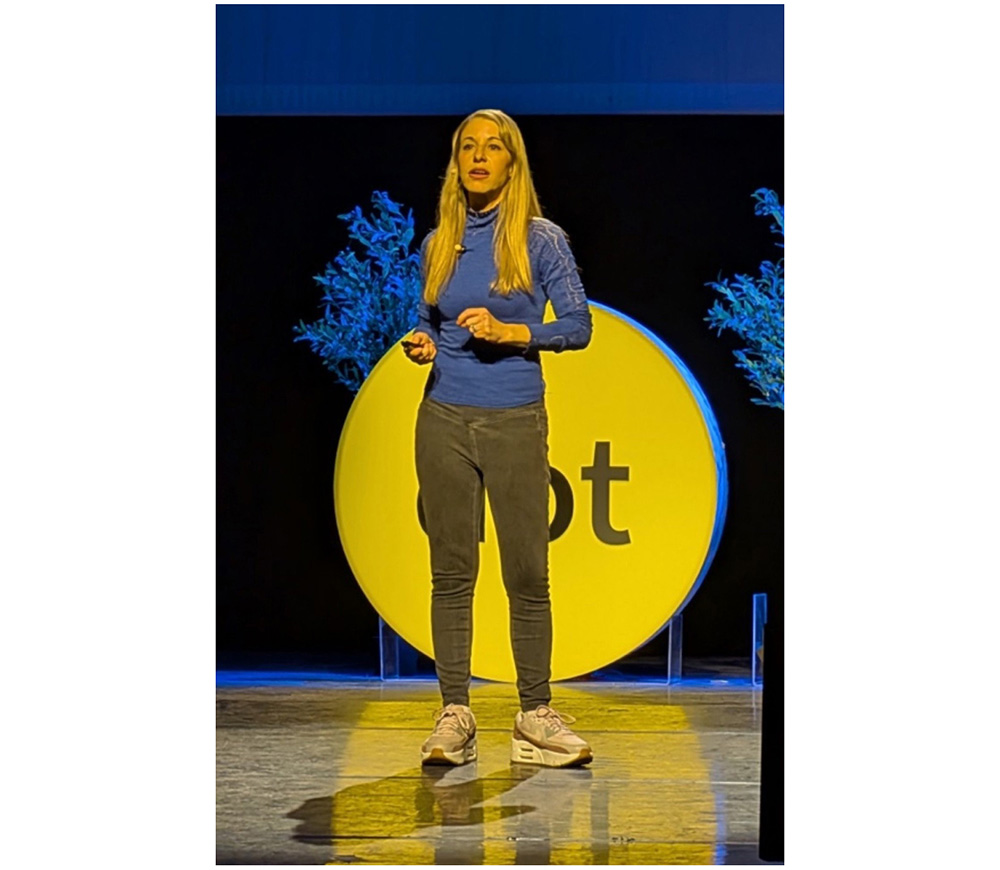
Sarah onstage at dotjs in Paris
The Human Element
One of the best parts of my job is working deeply with engineering leaders across the whole company. My Search counterparts are amazing. They’re thoughtful, driven and hardworking. Many eng leaders in Search were there way back when and wrote the initial functionality. One Friday afternoon, a VP I work closely with gave me access to the retro docs: a history of outages, decision matrices, and post-mortems. I spent the evening with a glass of wine, popcorning my way through some of the most fascinating technical papers I’ve ever read.
The part I don’t love is the politics- that sludgy bit that exists everywhere. I wonder how much further we would be without the muck. I’m not talking about healthy debate- we need conflict to sharpen ideas. I’m referring to the intangible politicking that prioritizes ego over outcomes. Paradoxically, being neurodivergent helps me here: nothing disarms a political maneuver faster than blunt, honest truth. It’s not the right tool for every situation, but it's effective more often than most realize.
In life and work, I try to be helpful. As an IC, I helped by coding. As a leader, I help most by thinking in systems, throwing technical gauntlets, and caring. Caring when expressed with action is hard, and it burns you out faster. But I won’t settle for the alternative.
Family: The Great Transition
Everyone says parenting is both grueling and rewarding, and they aren't kidding. As our kids transition into adulthood, our jobs have shifted away from the "endurance sport" of keeping them bathed and alive. It is now a delicate dance of knowing when to let them learn through failure and when to provide guidance.
Shame is a fascinating hurdle in parenting. We want to protect them from living in fear, yet we must provide a moral compass. I'm grateful that they still share their thoughts and feelings with us. We can have open conversations about the tough subjects, and still genuinely enjoy each other's company. Please don’t take that to mean we have it all figured out, I suspect no one fully does. I’m suspicious of people who claim they do. How can you “figure out” something so human, so malleable like transition to adulthood?
Most crucially, my husband Dizzy remains healthy, this is his longest remission yet! Thanks to CAR-T therapy, he’s healthy. While his type of lymphoma is technically incurable, every day he spends in remission is a victory for his overall health. I’m over the moon.
Finding Flow
Because so much of my time is spent supporting others, I’ve realized that hitting a "flow state" is my most vital healing. I don’t often find it in management or parenting, so I keep up coding on the weekends. It’s frustrating, fun, and keeps me sharp.
For years, I’ve been rewriting the same few apps in various frameworks and platforms, never releasing them. It’s a promise to myself: if there’s no "launch," there’s no pressure. Tinkering on something that is just mine, when everything else I do is for everyone else, just hits different.
That flow state took a new form this April. My youngest looked at me and said, “I really wish you played Minecraft with all of us.” Who could hear that and not immediately pick up a keyboard? I was hooked. I discovered I’m a decent builder and had the most fun with ATM10, and especially processing with AE2.
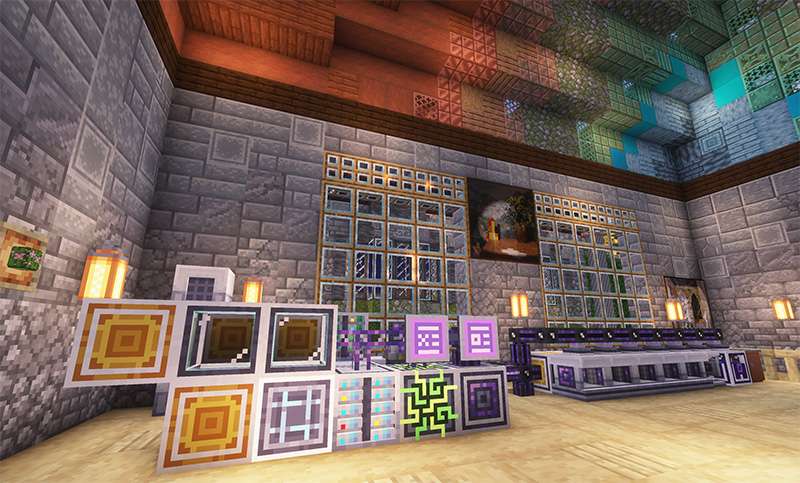
My little AE2 Workshop
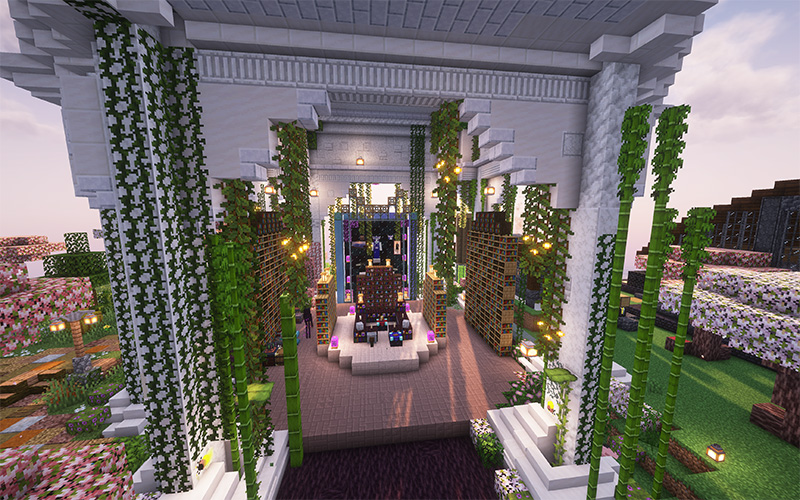
A library/arboretum
Then we played Vintage Story, which is like Minecraft in hard mode- you’re basically the first human and you must figure out how to survive. This game is both incredibly rewarding and perhaps the most yak-shaving endeavor I’ve ever intentionally opted into- I love it. I made cheese. For those of you who play Vintage Story, you know this to be the Final Boss.
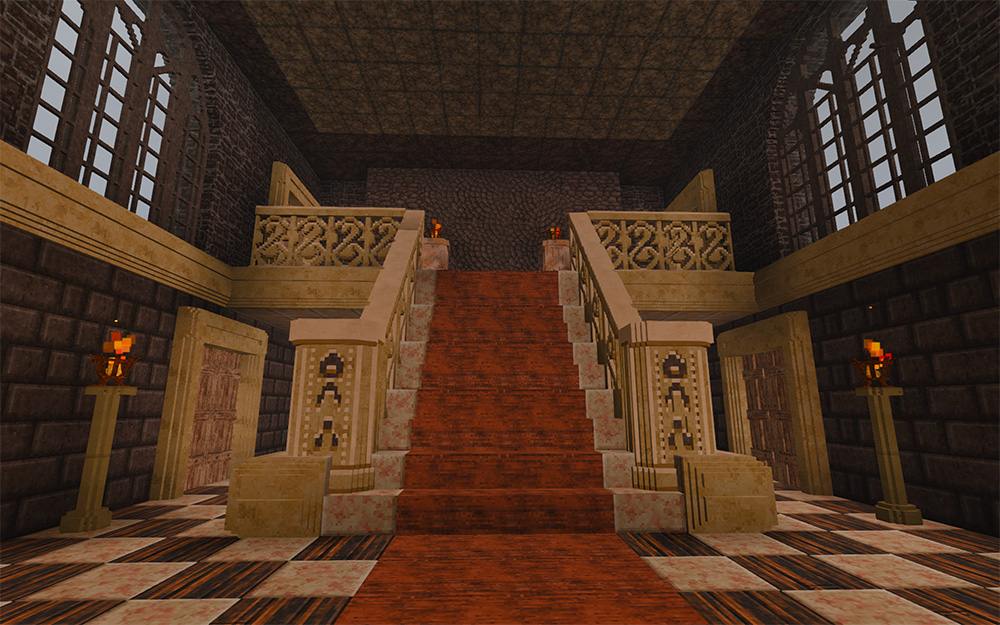
In Vintage Story, you can chisel blocks so you can make more unique builds
Beyond this, my book was released in China and Japan this year. I’m still donating half the proceeds to SheCodeAfrica and these releases helped. I also gave a lecture at the ACM titled The Death of Work, a blend of research and personal experience on leadership that I truly loved putting together.
Wrapping Up
What does 2026 hold? I’m unsure, but I do know I want my time on this pale blue dot to be impactful. Health scares have given our family the strange gift of acknowledging death: that time is finite. Our time with the kids is limited as they careen toward adulthood, held only by our homemade tethers.
Finally, I want to say thank you to the steady rocks in my life, you know who you are. And to my parents, who constantly push me: I have a new appreciation for the effort it took to help me take flight.
Let’s see what this next year brings.